
Table of Contents
Bihar
For centuries, spirituality and knowledge have flourished in Bihar, the birthplace of ancient wisdom. It is the hallowed place where the great mathematician-astronomer Aryabhata illuminated the world with his discoveries and where Lord Buddha attained enlightenment in Bodh Gaya. From the ageless remnants of Nalanda University
Bihar is a land where history, spirituality, and culture converge. In Patna, explore museums and the legacy of empires. Gaya and Bodh Gaya glow with Buddhist and Hindu spirituality, while Rajgir enchants with hills, hot springs, and the Peace Stupa. The ruins of Nalanda echo ancient scholarship, while Vaishali stands as the birthplace of democracy and Jainism. Madhubani shine brightly with its world-famous paintings, and Sasaram showcases Sher Shah Suri’s grand tomb. In the east, Purnia offers natural charm and vibrant rural life. Bihar truly is timeless India, Or So many Places who represent Bihar.
Places to Visit in Bihar
1. Patna
History of Patna:
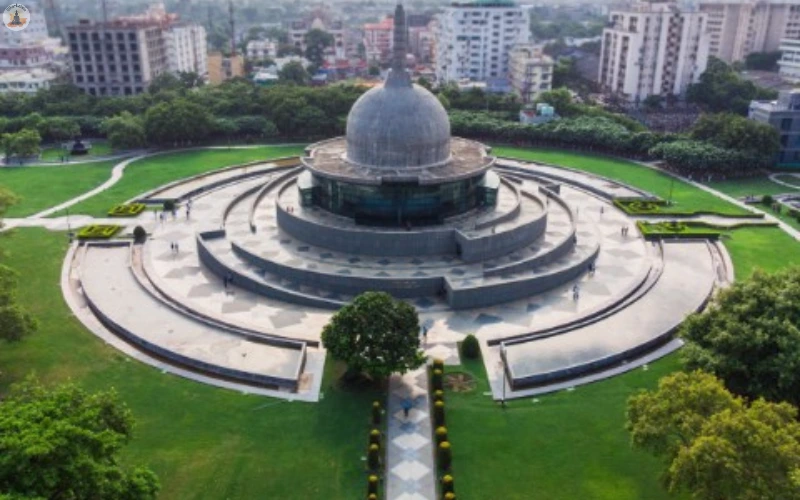
One of the oldest cities still inhabited in the world is Patna, formerly known as Pataliputra. It was established in the 5th century BCE and became the capital of strong empires such as the Gupta, Magadha, and Mauryan dynasties. Indian history was shaped here by great leaders like Ashoka the Great and Chandragupta Maurya, as well as scholars like Chanakya. Because of its location on the Ganga River, it was a centre of politics, culture, and trade.
Significance of Patna:
Many religions hold Patna in high regard. As one of the five holiest gurudwaras, Takht Sri Patna Sahib honours the birthplace of Guru Gobind Singh Ji, according to Sikhs. The city serves as a gateway to neighbouring pilgrimage sites like Nalanda, Rajgir, and Bodh Gaya for Buddhists, Jains, and Hindus. It also illustrates how Bihar’s culture has changed over time, striking a balance between its ancient legacy and contemporary advancement.
Places to Visit in Patna:
- Golghar – A 1786 granary in Patna, offering panoramic views of the Ganga.
- Patna Museum & Bihar Museum – treasure troves of art, relics, and history.
- Takht Sri Patna Sahib Gurudwara – a sacred Sikh shrine.
- Kumhrar – ruins of ancient Pataliputra.
- Agam Kuan (unfathomable well) – a Mauryan-era site linked to Ashoka.
- Gandhi Maidan – historic ground for political and cultural gatherings.
- Srikrishna Science Centre & Patna Planetarium – for interactive learning and space exploration.
- Hanuman Mandir – Famous Hanuman temple near Patna Junction.
2. Rajgir
History of Rajgir
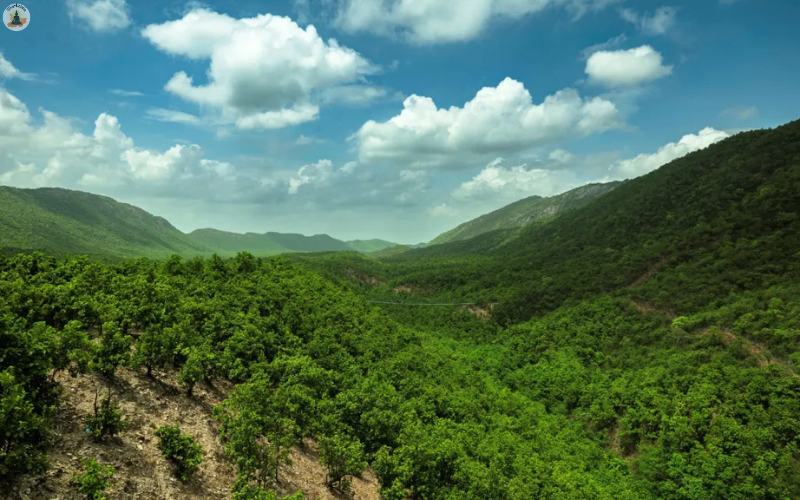
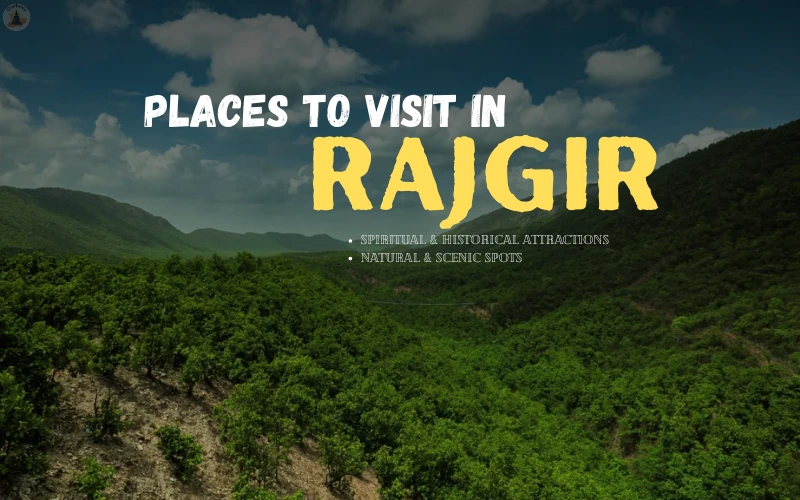
The Magadha Empire’s first capital, Rajgir, which translates to “the abode of kings,” was established in the sixth century BCE. When Bimbisara and Ajatashatru, two strong Magadha rulers, ruled, it was a well-known city. Rajgir also has close ties to Mahavira, the 24th Tirthankara of Jainism, and Lord Buddha, who meditated and taught here for a number of years. The city’s historical grandeur is attested by its ancient Cyclopean Walls, which were constructed with enormous stones without the use of mortar.
Significance of Rajgir:
Jains, Hindus, and Buddhists all hold Rajgir in high regard. For Buddhists, it is the location of the First Buddhist Council following Buddha’s Mahaparinirvana and the site of several of his significant teachings, including those on Griddhakuta (Vulture’s Peak). Rajgir is regarded by Jains as a sacred location connected to Lord Mahavira’s spiritual development. Its hot springs are considered sacred and therapeutic by Hindus. Rajgir now symbolises a singular fusion of history, religion, and scenic beauty.
Places to visit in Rajgir:
- Vishwa Shanti Stupa – a white peace pagoda atop Ratnagiri Hill, accessible by ropeway.
- Hot Springs (Brahmakund) – sacred kunds with medicinal properties.
- Vulture’s Peak (Griddhakuta Hill) – Buddha’s meditation and preaching site.
- Son Bhandar Caves – mysterious caves linked to Jain and Mauryan history.
- Cyclopean Walls – ancient 40 km stone fortifications.
- Rajgir Ropeway – scenic ride to the Peace Stupa.
- Rajgir Zoo Safari & Ghora Katora Lake – modern attractions blending adventure with nature.
3. Nalanda
History of Nalanda:
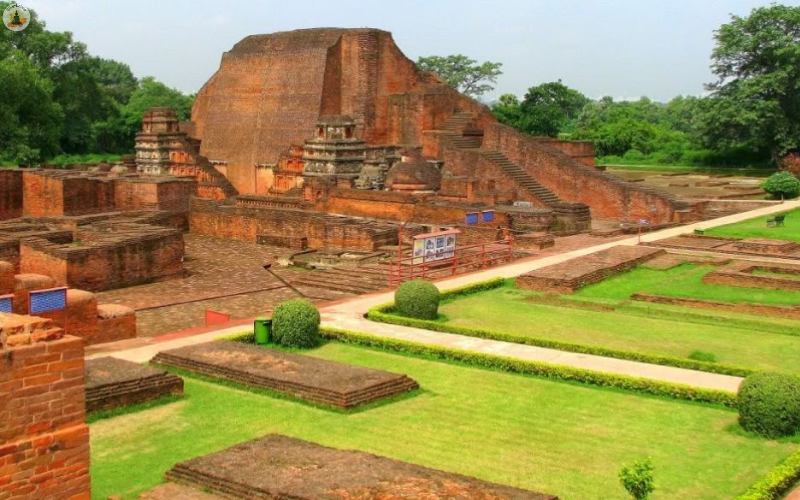
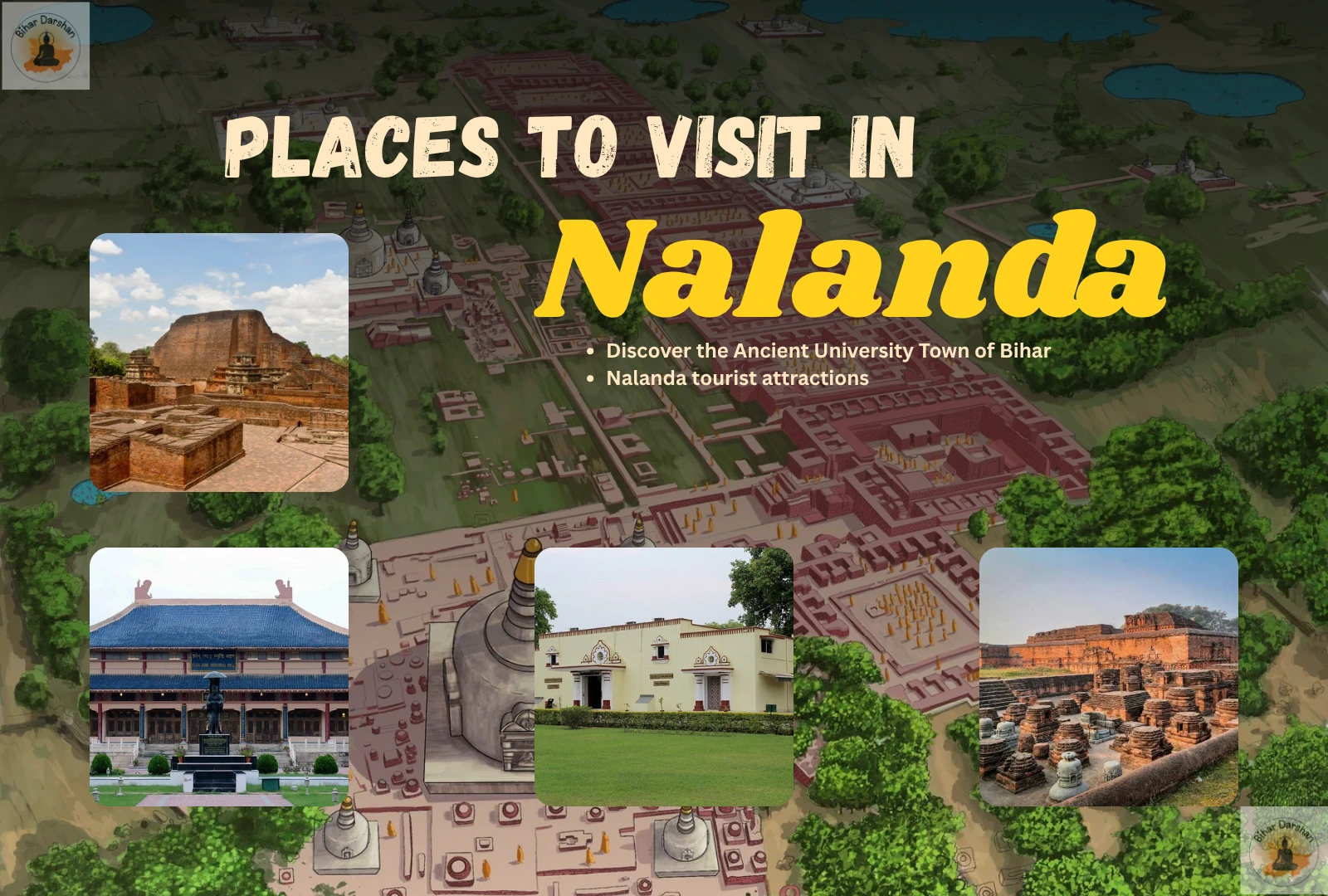
The world’s first residential university was once located in Nalanda, close to Rajgir. It was founded during the Gupta dynasty in the fifth century CE and flourished under the Pala kings. Students and academics from all over Asia, including China, Korea, Tibet, and Central Asia, were drawn to it. With more than 10,000 students and 2,000 faculty members, Nalanda University offered courses in astronomy, medicine, philosophy, and Buddhist texts at its height. Here, the renowned Chinese traveler Xuanzang (Hiuen Tsang) studied and imparted knowledge, leaving behind thorough documentation. Unfortunately, Bakhtiyar Khilji destroyed the university in the 12th century, bringing an end to a glorious period of knowledge.
Significance of Nalanda:
As a UNESCO World Heritage Site, Nalanda represents India’s long history of intellectual exchange and education. Because it produced numerous scholars who disseminated Buddhism throughout Asia, it is highly regarded by Buddhists. The world is reminded by the Nalanda ruins of the value of education, communication, and cross-cultural relationships. Through the contemporary Nalanda University, attempts are currently underway to revitalise its legacy.
Places to visit in Nalanda:
- Nalanda University Ruins – remnants of monasteries, classrooms, and stupas spread across a vast campus.
- The Great Stupa of Nalanda – a massive brick stupa surrounded by votive stupas.
- Hiuen Tsang Memorial Hall – built in memory of the Chinese scholar who documented Nalanda’s glory.
- Nalanda Archaeological Museum – houses Buddhist statues, manuscripts, and ancient artifacts.
- Nav Nalanda Mahavihara – a modern center for Pali and Buddhist studies.
4. Gaya / Bodh Gaya
History of Bodh Gaya:
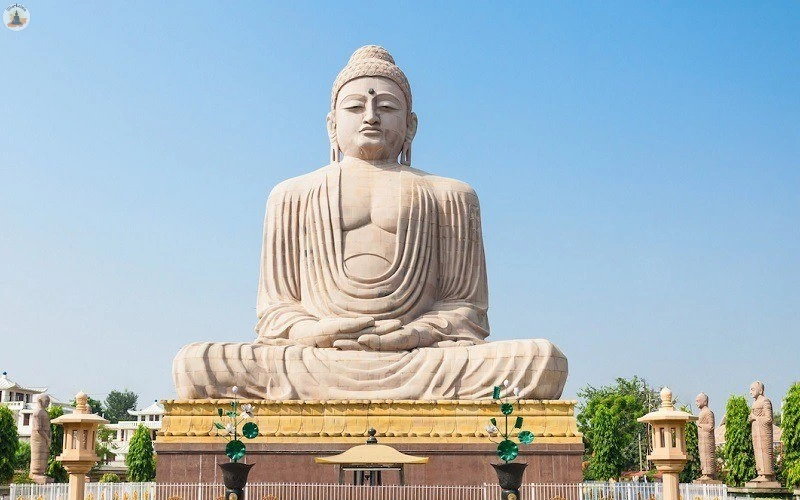
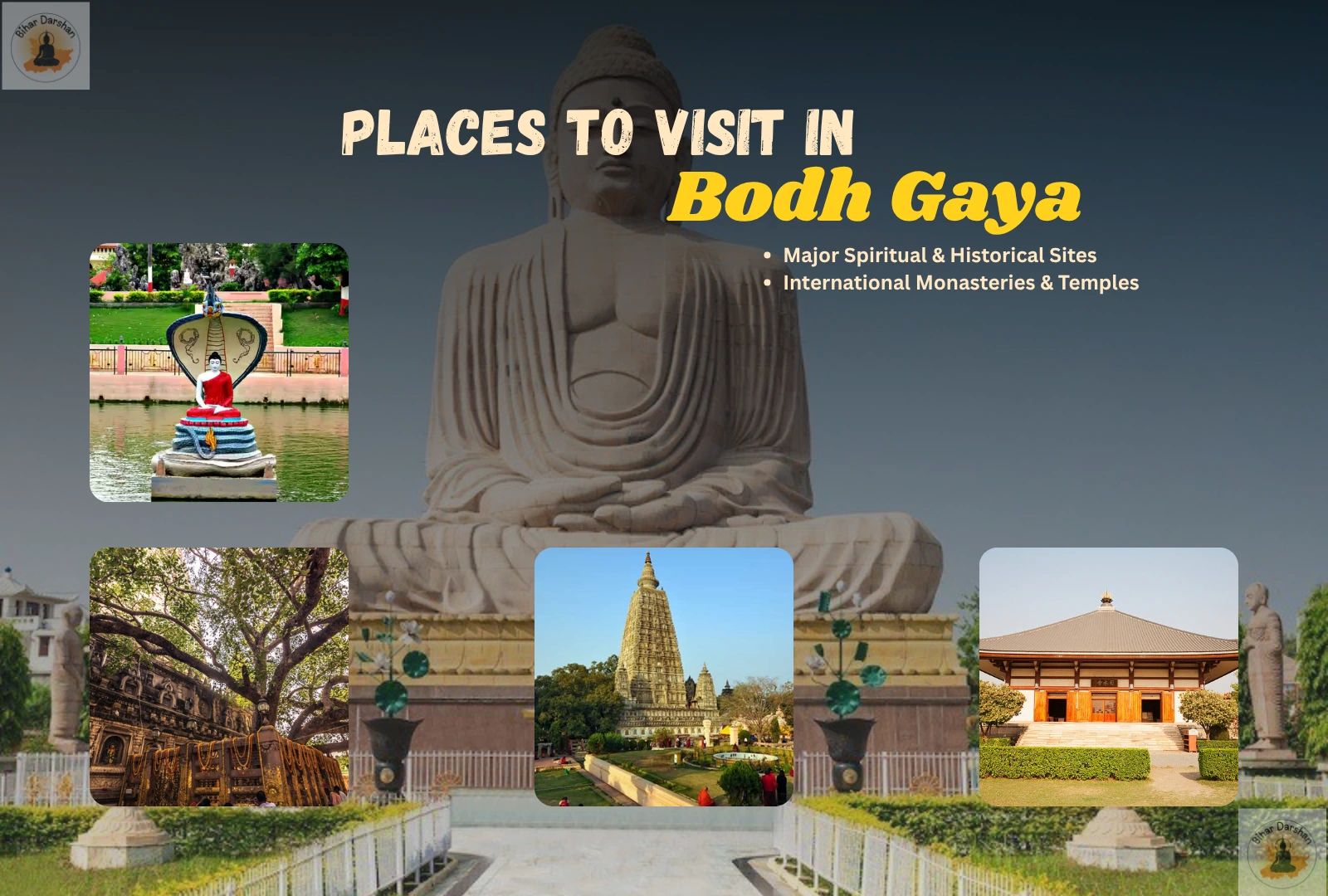
One of the holiest sites in the world for Buddhists is Bodh Gaya, which is in the Gaya district of Bihar. In the sixth century BCE, Prince Siddhartha became Gautama Buddha after achieving enlightenment here beneath the Bodhi tree. In the third century BCE, Emperor Ashoka came to Bodh Gaya and constructed the first Mahabodhi Temple, establishing the place as a hallowed pilgrimage destination. Bodh Gaya developed into the spiritual hub of Buddhism over many centuries, drawing scholars, monks, and tourists from all over Asia.
Significance of Bodh Gaya:
Bodh Gaya is of great worldwide significance and is regarded as the birthplace of Buddhism. In addition to being a UNESCO World Heritage Site, it is a place where people of all faiths go to meditate and think. Due to the construction of monasteries by pilgrims from Buddhist countries such as Sri Lanka, Thailand, Japan, and Bhutan, Bodh Gaya has become a thriving global centre of religion and culture.
Places to Visit in Bodh Gaya:
- Mahabodhi Temple – iconic UNESCO site, originally built by Ashoka, with a grand spire.
- Bodhi Tree – sacred tree where Buddha attained enlightenment.
- Great Buddha Statue – a 25-meter tall seated Buddha, symbol of peace.
- Animesh Lochan Chaitya – where Buddha meditated after enlightenment.
- Muchalinda Lake – associated with Buddha’s meditation protected by the serpent king.
- International Monasteries – built by countries like Japan, Thailand, and Bhutan, reflecting unique Buddhist architecture.
5. Sasaram:
History of Sasaram:
In Bihar’s Rohtas district sits the mediaeval city of Sasaram. It gained popularity under Sher Shah Suri (1486–1545), an Afghan king who, after defeating the Mughals, established the Suri Empire in North India. Sher Shah is known for establishing the Grand Trunk Road, India’s oldest highway, reforming the government, and introducing the Rupiya, the forerunner of the Indian rupee. His final resting place and capital was Sasaram, and his tomb is a masterpiece of Indo-Islamic architecture.
Significance of Sasaram:
Sasaram is important as a hub for political history and architectural legacy. Sher Shah’s magnificent mausoleum, regarded as one of the best monuments of the 16th century, captures the splendour of the Afghan dynasty. The area is a fusion of nature and history, with hills, waterfalls, and other natural beauty.
Places to visit in Sasaram:
- Sher Shah Suri Tomb – an architectural marvel built in red sandstone, standing in the middle of a lake.
- Rohtas Fort – a UNESCO-recognized fort complex with palaces, temples, and gates.
- Tomb of Hasan Khan Suri – dedicated to Sher Shah’s father.
- Tara Chandi Hill & Temple – a scenic and spiritual spot.
- Kaimur Hills & Waterfalls (Manjhar Kund, Dhua Kund) – natural attractions near Sasaram.
6. Vaishali
History Of Vaishali:
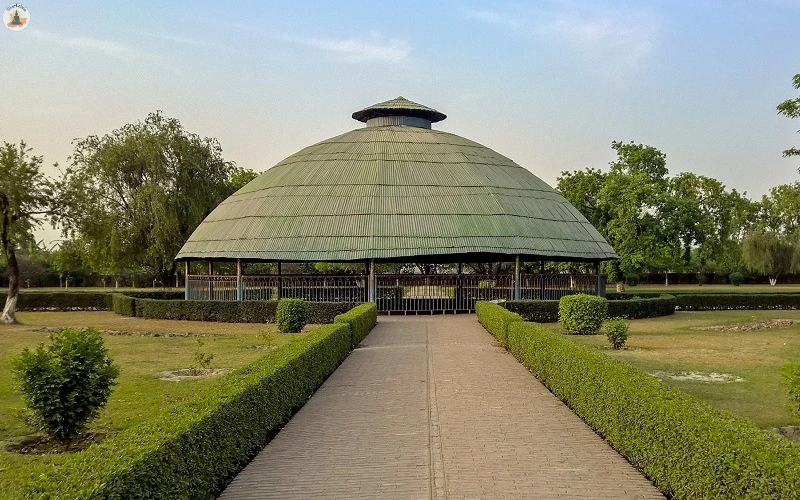
Located in modern-day Bihar, Vaishali is considered the world’s first republic (6th century BCE) with an elected assembly, predating even modern democracy. It thrived as a hub of politics and trade and served as the capital of the Vajji confederacy. In addition, Vaishali has great religious significance because it is the birthplace of Lord Mahavira, the 24th Jain Tirthankara, and the location of Gautama Buddha’s final sermon. A stone pillar with a lion capital on top was later built to commemorate Vaishali’s importance by Emperor Ashoka.
Significance of Sasaram:
Buddhists, Jains, and historians all hold Vaishali in high regard. It is a sacred location for Buddhists, connected to the Second Buddhist Council and the teachings of the Buddha. Since Mahavira was born there, it is a significant pilgrimage site for Jains. Being India’s first republic, Vaishali also symbolises the country’s rich history of civic engagement and governance.
Places to visit in Vaishali:
- Ashokan Pillar – a polished sandstone pillar with a lion capital, symbol of Ashoka’s reign.
- Vishwa Shanti Stupa – a white peace pagoda built by the Japanese Buddhist order.
- Abhishek Pushkarini (Coronation Tank) – where Licchavi kings were anointed.
- Buddha Relic Stupa – said to enshrine relics of Buddha.
- Vaishali Museum – displays artifacts from the Vajji republic and Buddhist relics.
- New Buddha Samyak Darshan Stupa – a massive sandstone memorial inaugurated recently.
7. Madhubani
History of Madhubani:
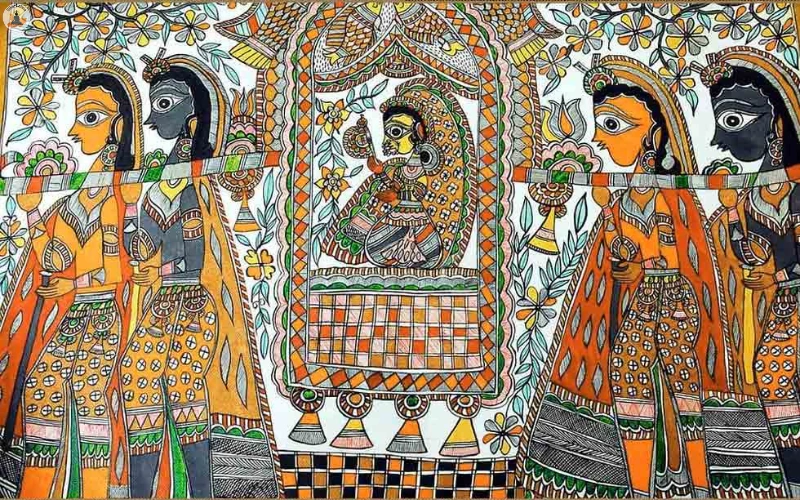
Madhubani, which translates to “forest of honey,” is an ancient cultural centre located in northern Bihar, close to the Nepali border. The region is well-known for its Madhubani (Mithila) paintings, a traditional folk art form that is believed to have originated during the Ramayana, when King Janaka of Mithila hired artists to depict his daughter Sita’s marriage to Lord Rama. This art form, which is mostly done by women on walls, floors, and later on canvas and paper, developed over centuries into a distinctive representation of nature, mythology, and rural life.
Significance of Madhubani:
Madhubani is well-known throughout the world for his Mithila paintings, which attracted attention in the 20th century and are currently exported all over the world. Because the art tradition has given local families a means of subsistence and cultural pride, the area is a symbol of creativity, heritage, and women’s empowerment. Madhubani is a significant destination for heritage tourism since it is home to historic temples, forts, and Mithila cultural customs.
Places to Visit in Madhubani are:
- Kapileshwar Sthan – a historic Shiva temple revered by locals.
- Naulakha Palace (Rajnagar Palace) – an architectural remnant of the Darbhanga Raj.
- Ugna Temple – linked to poet Vidyapati and Lord Shiva.
- Somnath Mahadev Temple – an ancient shrine dedicated to Lord Shiva.
- Madhubani Painting Villages (like Jitwarpur, Ranti) – where one can see and buy authentic artwork.
8. Kakolat Falls – Nature’s Hidden Gem of Bihar
History of Kakolat Falls:
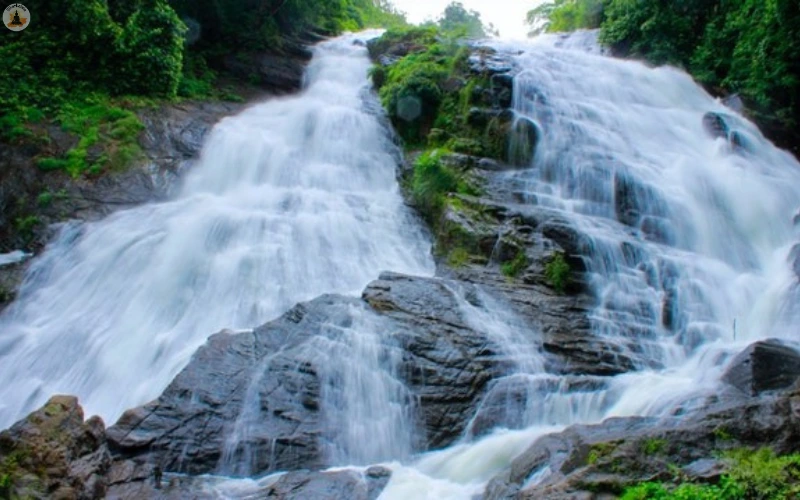
On the Bihar–Jharkhand border, close to Nawada district, Kakolat Falls is not only a beautiful waterfall but also a site steeped in legend. A cursed king was changed into a python and lived here until the Pandavas freed him during their exile, according to Mahabharata legends. Locals consider the waters of Kakolat to be holy and cleansing, and the site has been revered ever since.
Significance of Kakolat Falls:
One of Bihar’s most visited natural landmarks is Kakolat Falls. About 160 feet high, the waterfall creates a natural pool at its base, which is a popular place for tourists to unwind and take a bath. It is also a major hub for regional celebrations, particularly during Chaitra Sankranti, when pilgrims and visitors congregate for ceremonies and marketplaces. The autumn is the ideal fusion of spirituality and adventure because of its tranquil surroundings, refreshing waters, and mythological associations.
Places to Visit in Kakolat:
- Kakolat Hill & Forest – lush surroundings ideal for trekking and picnics.
- Rajgir (nearby) – famous for hot springs, ropeway, and Vishwa Shanti Stupa.
- Nalanda University Ruins – UNESCO World Heritage Site, not far from Nawada.
- Local Villages – offering authentic rural experiences and Mithila culture.
9. Pawapuri
History of Pawapuri:
Bihar’s Nalanda district is home to Pawapuri, also referred to as Apapuri. As the location where Lord Mahavira, the 24th Tirthankara of Jainism, achieved Nirvana (moksha) circa 527 BCE, it is of great significance in Jain history. King Ajatashatru of Magadha ruled over a thriving kingdom at the time, Pawapuri. Following the cremation of Mahavira, it is thought that countless devotees removed soil from the cremation site, creating a sizable pond.
Significance of Pawapuri:
One of the holiest pilgrimage sites for Jains worldwide is Pawapuri. Thousands of worshippers come to this sacred location each year to honour Lord Mahavira. The location reflects the central ideas of Jainism and is a symbol of purity, non-violence, and liberation. It is also a spiritual and cultural destination because of its beautiful architecture and tranquil surroundings.
Places to Visit in Pawapuri:
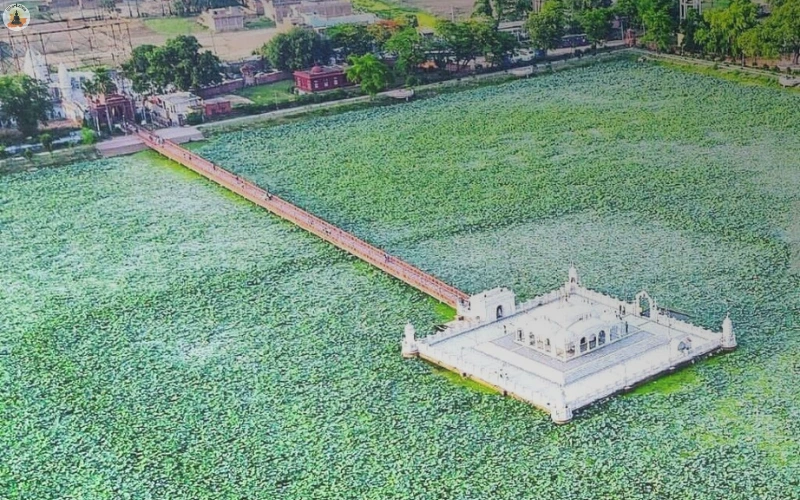
- Jal Mandir – a stunning marble temple situated in the middle of a lotus-filled pond, marking the cremation site of Mahavira.
- Samosharan Temple – believed to be the place where Mahavira delivered his sermons.
- Gaon Mandir (Gunajayaji Mandir) – another important Jain temple dedicated to Mahavira.
- Surrounding Lotus Lake – a peaceful setting that enhances the spiritual experience.
Know More About Pawapuri
10. Valmiki National Park
History of Valmiki Park:
Almiki National Park, which spans the Indo-Nepal border in the Himalayan Terai region, is situated in the West Champaran district of Bihar. It is the sole national park in Bihar and a part of the larger Valmiki Tiger Reserve, which was designated a Tiger Reserve in 1990. Maharishi Valmiki, the sage who wrote the Ramayana and is thought to have resided in this area, is honoured by the forest’s name.
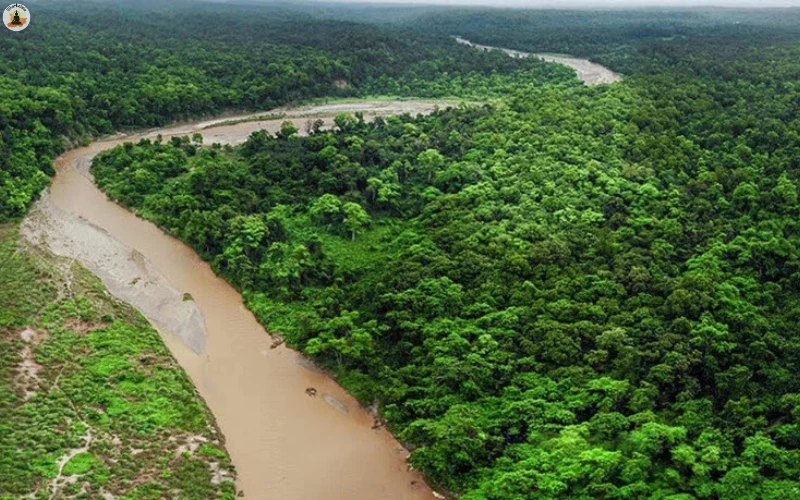
Significance of Valmiki Park:
Both ecologically and culturally, the park is extremely significant. The Royal Bengal Tiger, Indian leopard, sloth bear, and wild dog are among the endangered species that call it home. It is officially recognised as India’s 18th Tiger Reserve. It is also a birdwatcher’s paradise, home to more than 250 different species of birds. Because of its connection to Valmiki and Sita, who is thought to have resided here during her exile, the region is revered spiritually by the locals.
Places to Visit in Valmiki Park:
- Tiger Reserve Safari – explore core areas to spot tigers and other wildlife.
- Valmiki Ashram – associated with Sage Valmiki and the Ramayana.
- Someshwar Fort & Hills – scenic ruins with trekking opportunities.
- Triveni Sangam (Nepal border) – confluence of Gandak, Sonha, and Pashupathi rivers.
- Bird-Watching Points – wetlands and forest areas rich in migratory and resident birds.
Why Visit Bihar ?
One of India’s most culturally and spiritually rich states is Bihar, which is frequently referred to as the birthplace of Indian civilisation. It is the region where knowledge expanded globally, empires grew, and religions thrived. Regardless of your interests—history, spirituality, or the natural world—Bihar has something special to offer.
Spiritual Significance
Bodh Gaya, where Lord Buddha attained enlightenment beneath the Bodhi tree, is located in Bihar. It is among the four holiest places for Buddhists worldwide. Since Lord Mahavira achieved Nirvana in Pawapuri, Jainism has strong ties to this region as well. To carry out ancestral rites, Hindu pilgrims travel to Gaya Ji (Vishnupad Temple). As a result, Bihar is a major destination for pilgrims from many different religions.
Ancient History & Culture
- Nalanda University – one of the world’s oldest universities, where scholars from across Asia studied.
- Vaishali – the world’s first republic and an important site for Buddhism and Jainism.
- Patna (ancient Pataliputra) – capital of the mighty Mauryan and Gupta empires.
Unique Art & Handicrafts
The Mithila region’s renowned Madhubani paintings are now well-known throughout the world. These colourful works of art, which were produced using natural dyes, depict everyday life and mythological tales.
Natural Beauty & Wildlife
- Kakolat Falls – a stunning waterfall perfect for a refreshing escape.
- Valmiki National Park – Bihar’s only tiger reserve, home to tigers, leopards, and rich biodiversity.
- Ganges River Ghats – serene spots to witness spiritual rituals and local culture.
Cultural Festivals
Chhath Puja is celebrated in Bihar with unparalleled fervour and opulence, drawing tourists from all over India. Bihar’s distinctive customs are displayed at other celebrations such as the Sonepur Mela, Asia’s biggest cattle fair.
Warm Hospitality & Authentic Food
Bihar is renowned for its friendliness and simplicity. Visitors can savour traditional flavours that capture the essence of the state, such as litti-chokha, sattu paratha, khaja, and more.
Conclusion:
Bihar is more than just a state; it’s a spiritual and historical journey. From Madhubani’s artwork to Valmiki’s wilderness, from Bodh Gaya’s enlightenment to Nalanda’s age-old wisdom, Bihar is a place that combines tradition, religion, nature, and culture.
FAQ’s About Bihar
1. Why is Bihar famous?
Bihar is well-known for its rich cultural, spiritual significance, and long history. It is the location of the first republic in history (Vaishali), the enlightenment of Buddha, and the historic Nalanda University.
2. Is Bihar safe for tourists?
Indeed, Bihar is generally safe for travellers, particularly when visiting well-known locations like Vaishali, Patna, Bodh Gaya, and Nalanda. Basic travel safety measures are recommended, just like anywhere else.
3. What language is spoken in Bihar?
Depending on the area, residents also speak Bhojpuri, Maithili, Magahi, and Angika in addition to Hindi and Urdu, which are the official languages.
4. Which food is Bihar famous for?
Bihar is Famous for its traditional dishes, including Makhana dishes, Khaja (sweet), Litti Chokha, Sattu Paratha, and Thekua.
5. What is the culture of Bihar like?
Bihar’s culture is deeply rooted in spirituality, festivals, and folk traditions. The state is known for Chhath Puja, Madhubani paintings, and its rich history of education and kingdoms.

Leave a Reply